Introduction
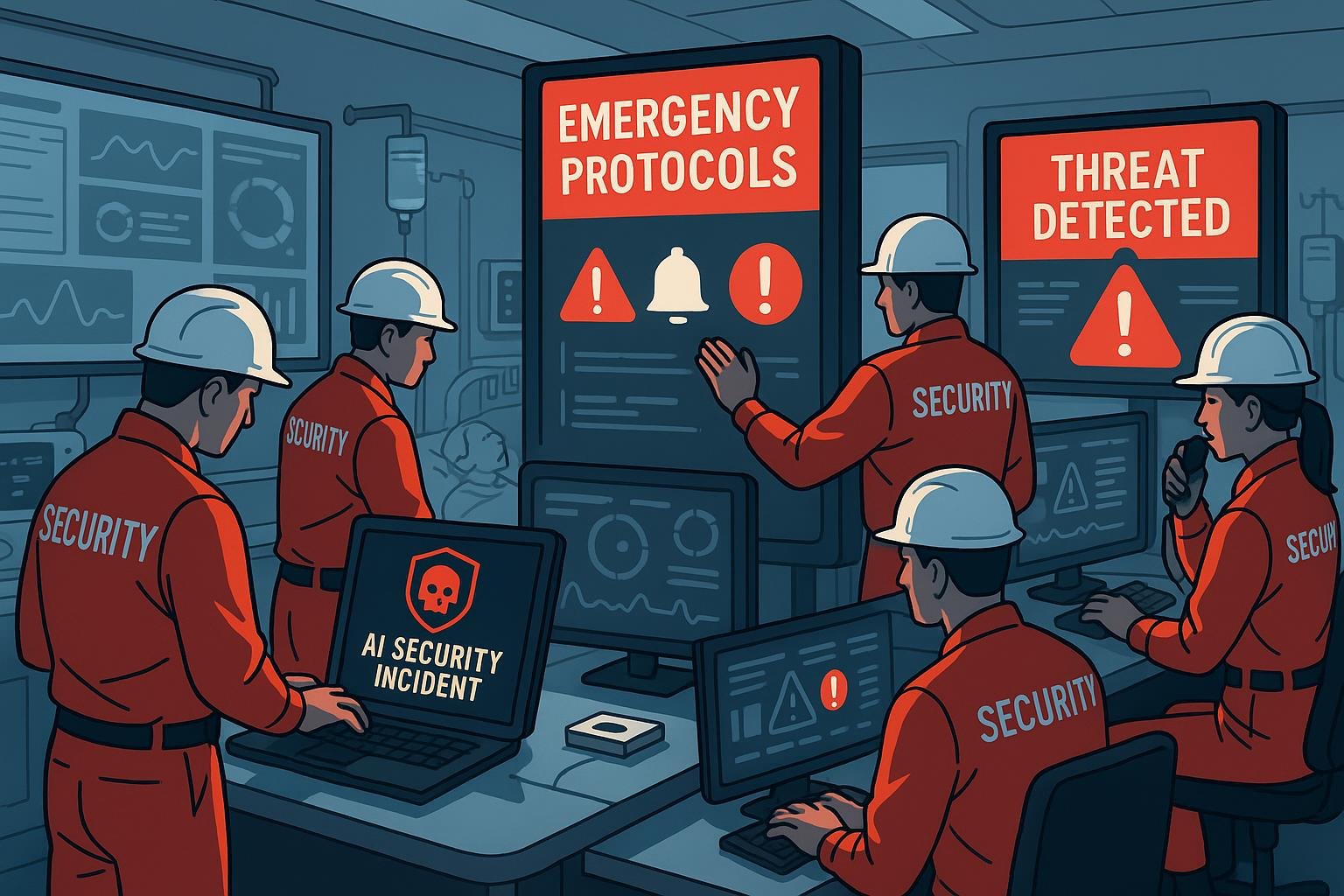
The alert came in at 3:42 AM on a Tuesday morning, but it wasn’t like any security incident Dr. James Chen had seen before. As Chief Information Security Officer at Pacific Medical Center, he had responded to countless cybersecurity incidents—malware infections, phishing attacks, data breaches, and system compromises. But this was different. This was an AI incident.
Their ambient clinical AI system was generating clinical notes with subtle but concerning anomalies. Medication dosages were slightly off, diagnostic codes didn’t match the audio recordings, and some patient symptoms were being systematically under-reported. Traditional incident response procedures seemed inadequate for this new type of threat.
“We knew how to respond to a server being compromised or data being stolen,” Dr. Chen recalled months later. “But how do you respond when the AI itself is the problem? How do you investigate an incident where the evidence is buried in machine learning algorithms and training data? How do you recover from an attack that targets the intelligence of your systems rather than just the data?”
The incident turned out to be a sophisticated data poisoning attack that had been ongoing for months, gradually corrupting the AI’s training data to influence its behavior. Traditional forensic tools were useless for investigating AI model corruption, and standard recovery procedures couldn’t address compromised machine learning algorithms.
“That incident taught us that AI security events require fundamentally different response approaches,” Dr. Chen explained. “We had to develop new forensic techniques, new recovery procedures, and new ways of thinking about incident containment and evidence preservation. We essentially had to reinvent incident response for the AI age.”
Eighteen months later, Pacific Medical Center has developed one of the most comprehensive AI incident response programs in healthcare, successfully detecting and responding to multiple AI-specific security events while maintaining patient safety and regulatory compliance.
“AI incident response isn’t just about protecting data anymore,” Dr. Chen reflected. “It’s about protecting the intelligence that makes critical decisions about patient care. The stakes are higher, the techniques are more complex, and the consequences of getting it wrong can directly impact patient safety.”
Today, we’ll explore the unique challenges of incident response for healthcare AI systems, examining AI-specific incident types, response procedures, and recovery strategies that healthcare organizations need to protect their ambient clinical AI deployments.
Understanding AI Security Incidents
AI security incidents represent a new category of cybersecurity events that target the artificial intelligence systems themselves rather than just the underlying infrastructure or data. These incidents require specialized detection, investigation, and response techniques that go beyond traditional cybersecurity approaches.
Categories of AI Security Incidents
Category 1: Data Poisoning Incidents
Attacks that corrupt AI training data to influence model behavior:
“`
Data Poisoning Incident Types:
Training Data Corruption:
- Malicious modification of historical clinical notes
- Injection of biased or incorrect medical information
- Systematic alteration of medication dosages or protocols
- Introduction of false diagnostic patterns
Label Manipulation:
- Changing diagnostic codes associated with symptoms
- Altering treatment outcome classifications
- Modifying risk assessment labels
- Corrupting clinical decision support classifications
Backdoor Insertion:
- Embedding hidden triggers in training data
- Creating specific conditions that cause AI malfunction
- Inserting covert channels for ongoing manipulation
- Establishing persistent access through AI behavior
“`
Category 2: Model Manipulation Incidents
Direct attacks on AI models and algorithms:
“`
Model Attack Incident Types:
Adversarial Attacks:
- Real-time manipulation of AI inputs to cause errors
- Audio manipulation to fool speech recognition
- Systematic exploitation of model vulnerabilities
- Coordinated attacks to degrade AI performance
Model Extraction:
- Unauthorized copying or theft of AI models
- Reverse engineering of proprietary algorithms
- Intellectual property theft through model analysis
- Competitive intelligence gathering through AI probing
Model Inversion:
- Extraction of training data from deployed models
- Recovery of patient information through model analysis
- Privacy violations through algorithmic inference
- Reconstruction of sensitive clinical information
“`
Category 3: Infrastructure Compromise Incidents
Traditional cybersecurity incidents affecting AI systems:
“`
Infrastructure Incident Types:
AI System Compromise:
- Malware infection of AI processing systems
- Unauthorized access to AI training infrastructure
- Compromise of AI model storage and deployment systems
- Lateral movement through AI service networks
Cloud AI Service Attacks:
- Compromise of cloud-based AI services
- Unauthorized access to AI APIs and interfaces
- Exploitation of cloud AI service vulnerabilities
- Misuse of AI service credentials and access tokens
Supply Chain Attacks:
- Compromise of AI vendor systems and services
- Malicious updates to AI software and models
- Third-party service provider security incidents
- Vendor credential compromise and misuse
“`
Category 4: Privacy and Compliance Incidents
Events that violate patient privacy or regulatory requirements:
“`
Privacy Incident Types:
Data Exposure:
- Unauthorized access to patient conversations
- Inadvertent disclosure of clinical notes
- Misconfigured AI systems exposing patient data
- Breach of AI training data repositories
Consent Violations:
- AI processing without proper patient consent
- Use of patient data beyond authorized purposes
- Violation of patient opt-out preferences
- Unauthorized sharing of AI-generated insights
Regulatory Compliance Failures:
- HIPAA violations in AI processing
- Failure to meet data retention requirements
- Inadequate audit trails for AI decisions
- Non-compliance with AI-specific regulations
“`
AI Incident Detection Challenges
Detecting AI security incidents presents unique challenges that don’t exist with traditional cybersecurity events:
Subtle and Gradual Impact:
- AI attacks often manifest as gradual performance degradation
- Changes may be too subtle for immediate detection
- Impact may only become apparent over time
- Traditional monitoring tools may miss AI-specific anomalies
Complex Causation:
- Multiple factors can affect AI performance
- Distinguishing between attacks and legitimate changes is difficult
- Root cause analysis requires AI expertise
- False positives can overwhelm security teams
Limited Visibility:
- AI decision-making processes are often opaque
- Model behavior changes may not be immediately visible
- Training data corruption may not affect current operations
- Long-term impacts may not be apparent for months
Building an AI Incident Response Program
Developing an effective incident response program for healthcare AI requires specialized capabilities, procedures, and expertise that extend beyond traditional cybersecurity incident response.
AI Incident Response Team Structure
Core Team Composition:
“`
AI Incident Response Team:
Incident Commander:
- Overall incident coordination and decision-making
- Communication with executive leadership
- Resource allocation and priority setting
- Regulatory notification and compliance coordination
AI Security Specialist:
- AI-specific threat analysis and investigation
- Model forensics and behavior analysis
- AI system containment and isolation
- Technical recovery and remediation
Clinical Safety Officer:
- Patient safety impact assessment
- Clinical workflow continuity planning
- Provider communication and training
- Patient notification and care coordination
Data Protection Officer:
- Privacy impact assessment and management
- Regulatory compliance and notification
- Patient rights and consent management
- Legal and regulatory coordination
IT Security Analyst:
- Traditional cybersecurity investigation
- Infrastructure analysis and forensics
- Network and system containment
- Evidence collection and preservation
Communications Coordinator:
- Internal and external communication
- Media relations and public statements
- Stakeholder notification and updates
- Crisis communication management
“`
Extended Team Resources:
“`
Specialized Support Resources:
AI Forensics Expert:
- Advanced AI model analysis and investigation
- Machine learning algorithm forensics
- Training data analysis and validation
- Expert witness and legal support
Clinical Informatics Specialist:
- Clinical workflow impact assessment
- EHR integration and data analysis
- Clinical decision support evaluation
- Provider training and support
Legal Counsel:
- Regulatory compliance and notification
- Litigation risk assessment and management
- Contract and vendor relationship management
- Privacy law and patient rights coordination
Vendor Liaison:
- AI vendor coordination and communication
- Technical support and escalation
- Contract enforcement and remediation
- Service level agreement management
“`
AI Incident Response Procedures
Phase 1: Detection and Initial Assessment
AI-Specific Detection Methods:
“`
AI Incident Detection Framework:
Automated Monitoring:
- AI model performance monitoring and alerting
- Statistical process control for AI outputs
- Behavioral analytics for AI system usage
- Anomaly detection for AI decision patterns
Clinical Quality Monitoring:
- Clinical note quality assessment and validation
- Diagnostic accuracy monitoring and trending
- Treatment recommendation analysis
- Patient outcome correlation and analysis
Security Event Correlation:
- Integration with traditional SIEM systems
- AI-specific security event detection
- Cross-system correlation and analysis
- Threat intelligence integration and matching
“`
Initial Assessment Procedures:
“`
AI Incident Assessment Protocol:
Immediate Triage (0-30 minutes):
- Confirm AI incident vs. traditional security event
- Assess immediate patient safety impact
- Determine scope and affected systems
- Activate appropriate response team
Initial Investigation (30 minutes – 2 hours):
- Collect initial evidence and system logs
- Interview affected clinical staff
- Assess AI system behavior and performance
- Determine preliminary incident classification
Impact Assessment (2-4 hours):
- Evaluate patient safety and clinical impact
- Assess data privacy and compliance implications
- Determine business and operational impact
- Estimate recovery time and resource requirements
“`
Phase 2: Containment and Isolation
AI System Containment Strategies:
“`
AI Incident Containment:
Immediate Containment:
- Isolate affected AI systems from network
- Disable automated AI processing and decisions
- Switch to manual clinical documentation
- Preserve AI system state for forensic analysis
Selective Containment:
- Quarantine specific AI models or components
- Implement manual review of AI outputs
- Restrict AI system access and functionality
- Monitor remaining AI systems for similar issues
Gradual Containment:
- Implement enhanced monitoring and validation
- Reduce AI system confidence thresholds
- Increase human oversight and review
- Prepare for potential full system shutdown
“`
Evidence Preservation:
“`
AI Forensic Evidence Collection:
AI Model Preservation:
- Create forensic copies of AI models and weights
- Preserve training data and validation sets
- Document model configuration and parameters
- Capture AI system logs and audit trails
System State Documentation:
- Record current AI system performance metrics
- Document recent changes and updates
- Preserve user access logs and activities
- Capture network traffic and communications
Clinical Impact Documentation:
- Identify affected patient encounters
- Document clinical decisions influenced by AI
- Preserve clinical notes and recommendations
- Record provider feedback and observations
“`
Phase 3: Investigation and Analysis
AI Forensic Investigation Techniques:
“`
AI Incident Forensics:
Model Behavior Analysis:
- Compare current model behavior to baselines
- Analyze model outputs for anomalies and patterns
- Test model responses to known inputs
- Evaluate model confidence and uncertainty metrics
Training Data Analysis:
- Examine training data for corruption or manipulation
- Validate data integrity and authenticity
- Analyze data distribution and statistical properties
- Identify potential sources of data poisoning
Algorithm Forensics:
- Reverse engineer model decision-making processes
- Analyze model weights and parameters for anomalies
- Examine model architecture for unauthorized changes
- Validate model provenance and chain of custody
“`
Root Cause Analysis:
“`
AI Incident Root Cause Investigation:
Technical Analysis:
- Identify attack vectors and entry points
- Analyze malicious code or data modifications
- Examine system vulnerabilities and weaknesses
- Determine attack timeline and progression
Operational Analysis:
- Review security controls and procedures
- Analyze user access and activity patterns
- Examine change management and deployment processes
- Evaluate monitoring and detection capabilities
Organizational Analysis:
- Assess security awareness and training effectiveness
- Review vendor management and oversight
- Analyze incident response and communication
- Evaluate governance and risk management
“`
Phase 4: Recovery and Restoration
AI System Recovery Strategies:
“`
AI Incident Recovery:
Model Restoration:
- Restore AI models from clean backups
- Retrain models using validated data
- Implement enhanced validation and testing
- Deploy models with additional monitoring
Data Remediation:
- Clean and validate training data
- Remove corrupted or malicious data
- Implement enhanced data quality controls
- Establish ongoing data monitoring
System Hardening:
- Implement additional security controls
- Enhance monitoring and detection capabilities
- Improve access controls and authentication
- Strengthen vendor management and oversight
“`
Clinical Workflow Restoration:
“`
Clinical Operations Recovery:
Provider Training and Communication:
- Brief clinical staff on incident and resolution
- Provide training on enhanced security procedures
- Communicate changes to AI system behavior
- Establish ongoing feedback and monitoring
Patient Communication:
- Notify affected patients as required by regulations
- Provide information about incident and resolution
- Address patient concerns and questions
- Implement enhanced patient consent procedures
Quality Assurance:
- Implement enhanced clinical quality monitoring
- Conduct retrospective review of affected cases
- Validate AI system performance and accuracy
- Establish ongoing quality improvement processes
“`
Real-World AI Incident Response Case Studies
Several healthcare organizations have successfully responded to AI security incidents, providing valuable lessons and best practices for the industry.
Case Study 1: Data Poisoning Attack Response
Organization: Regional health system with 12 hospitals
Incident Type: Sophisticated data poisoning attack targeting ambient AI training data
Timeline: 6-month gradual attack with 72-hour response and recovery
Incident Timeline and Response:
Month 1-6: Attack Progression (Undetected)
“`
Attack Evolution:
Initial Compromise:
- Attackers gained access to training data repository
- Began systematic modification of historical clinical notes
- Focused on medication dosages and diagnostic codes
- Maintained stealth through gradual, subtle changes
Escalation Phase:
- Increased frequency and scope of data modifications
- Targeted specific clinical conditions and treatments
- Introduced bias toward certain diagnostic patterns
- Began affecting AI model retraining cycles
Impact Manifestation:
- Gradual degradation in AI diagnostic accuracy
- Subtle changes in medication recommendations
- Increased variance in clinical note quality
- Provider reports of unusual AI behavior
“`
Hour 0-4: Detection and Initial Response
“`
Incident Detection:
Discovery:
- Clinical quality analyst noticed pattern in AI recommendations
- Statistical analysis revealed systematic bias in AI outputs
- Correlation with recent model retraining cycles
- Escalation to AI security team for investigation
Initial Assessment:
- Confirmed AI model behavior anomalies
- Identified potential training data corruption
- Assessed immediate patient safety impact
- Activated AI incident response team
Immediate Containment:
- Isolated AI training infrastructure from network
- Suspended automated model retraining processes
- Implemented manual review of all AI outputs
- Preserved system state for forensic analysis
“`
Hour 4-24: Investigation and Analysis
“`
Forensic Investigation:
Training Data Analysis:
- Comprehensive analysis of training data repository
- Identification of 15,000+ modified clinical notes
- Pattern analysis revealing systematic attack methodology
- Timeline reconstruction of attack progression
Model Impact Assessment:
- Analysis of affected AI models and versions
- Evaluation of model performance degradation
- Assessment of clinical decision impact
- Quantification of patient safety implications
Attack Vector Analysis:
- Investigation of initial compromise method
- Analysis of attacker access and privileges
- Examination of security control failures
- Documentation of attack techniques and tools
“`
Hour 24-72: Recovery and Restoration
“`
Recovery Process:
Data Remediation:
- Restoration of training data from clean backups
- Validation and cleaning of corrupted data
- Implementation of enhanced data integrity controls
- Establishment of ongoing data monitoring
Model Retraining:
- Complete retraining of affected AI models
- Enhanced validation and testing procedures
- Deployment with additional monitoring controls
- Gradual restoration of AI system functionality
Security Enhancement:
- Implementation of additional access controls
- Enhanced monitoring and detection capabilities
- Improved data integrity validation
- Strengthened vendor management procedures
“`
Lessons Learned and Improvements:
Detection Enhancement:
- Implemented statistical process control for AI outputs
- Enhanced clinical quality monitoring and alerting
- Established baseline performance metrics for AI models
- Integrated AI monitoring with traditional SIEM systems
Response Capability:
- Developed AI-specific incident response procedures
- Trained incident response team on AI forensics
- Established relationships with AI security experts
- Created AI incident response playbooks and procedures
Prevention Measures:
- Implemented enhanced training data protection
- Established data integrity monitoring and validation
- Enhanced access controls for AI infrastructure
- Improved vendor security assessment and oversight
Case Study 2: Model Extraction Incident
Organization: Academic medical center with research focus
Incident Type: Unauthorized extraction of proprietary AI models
Timeline: 3-week attack with 48-hour response and recovery
Incident Overview:
A sophisticated attacker systematically queried the organization’s ambient AI system to extract and replicate their proprietary clinical AI models. The attack was discovered when unusual query patterns triggered automated monitoring systems.
Response Highlights:
Rapid Detection:
- Automated query pattern analysis detected anomalous behavior
- Machine learning-based anomaly detection identified systematic probing
- Real-time alerting enabled rapid response team activation
- Forensic analysis confirmed model extraction attempt
Effective Containment:
- Immediate implementation of query rate limiting
- Temporary suspension of external API access
- Enhanced authentication and authorization controls
- Preservation of attack evidence and system logs
Comprehensive Recovery:
- Implementation of advanced API security controls
- Enhanced query monitoring and anomaly detection
- Legal action against identified attackers
- Improved intellectual property protection measures
Results:
- Prevented successful model extraction and theft
- Enhanced API security and monitoring capabilities
- Improved detection and response procedures
- Strengthened legal and contractual protections
Advanced AI Incident Response Techniques
Beyond basic incident response procedures, several advanced techniques can enhance an organization’s ability to detect, investigate, and respond to AI security incidents:
AI Forensics and Investigation
Machine Learning Forensics:
“`
AI Forensic Techniques:
Model Behavior Analysis:
- Differential analysis of model outputs over time
- Statistical testing for model behavior changes
- Adversarial testing to identify vulnerabilities
- Confidence score analysis and validation
Training Data Forensics:
- Data provenance tracking and validation
- Statistical analysis of data distributions
- Anomaly detection in training datasets
- Integrity verification and validation
Algorithm Analysis:
- Model weight and parameter analysis
- Architecture comparison and validation
- Gradient analysis for training anomalies
- Backdoor detection and analysis
“`
Digital Evidence Collection:
“`
AI Evidence Preservation:
Model Artifacts:
- Complete model checkpoints and weights
- Training and validation datasets
- Model configuration and hyperparameters
- Training logs and performance metrics
System Evidence:
- AI infrastructure logs and audit trails
- Network traffic and communication logs
- User access logs and activity records
- System configuration and change logs
Clinical Evidence:
- Affected patient encounters and records
- Clinical decision documentation
- Provider feedback and observations
- Quality metrics and performance data
“`
Automated Incident Response
AI-Powered Response Automation:
“`
Automated Response Capabilities:
Intelligent Detection:
- Machine learning-based anomaly detection
- Behavioral analysis for AI systems and users
- Pattern recognition for attack signatures
- Predictive analytics for threat identification
Automated Containment:
- Dynamic isolation of compromised AI systems
- Automatic implementation of security controls
- Intelligent traffic filtering and blocking
- Adaptive response based on threat severity
Orchestrated Recovery:
- Automated backup and restoration procedures
- Intelligent model rollback and deployment
- Coordinated system recovery and validation
- Automated testing and verification
“`
Threat Intelligence Integration
AI-Specific Threat Intelligence:
“`
AI Threat Intelligence Framework:
Attack Pattern Recognition:
- Database of known AI attack techniques
- Indicators of compromise for AI systems
- Attack signature detection and matching
- Threat actor profiling and attribution
Vulnerability Intelligence:
- AI system vulnerability databases
- Zero-day threat intelligence and alerts
- Vendor security advisories and patches
- Research community threat sharing
Predictive Intelligence:
- Emerging threat trend analysis
- Attack prediction and early warning
- Risk assessment and prioritization
- Proactive defense recommendations
“`
Regulatory and Legal Considerations
AI incident response in healthcare involves complex regulatory and legal considerations that require specialized expertise and procedures:
Regulatory Notification Requirements
HIPAA Breach Notification:
“`
AI Incident Notification Framework:
Breach Assessment:
- Determination of PHI exposure or compromise
- Risk assessment for patient privacy impact
- Documentation of incident scope and impact
- Legal analysis of notification requirements
Notification Timeline:
- 60-day notification to Department of Health and Human Services
- Individual patient notification within 60 days
- Media notification for breaches affecting 500+ individuals
- Annual summary for smaller breaches
Documentation Requirements:
- Detailed incident description and timeline
- Assessment of PHI involved and individuals affected
- Description of response and mitigation actions
- Measures implemented to prevent future incidents
“`
State and Federal Reporting:
“`
Additional Notification Requirements:
State Breach Notification Laws:
- Compliance with state-specific notification requirements
- Coordination with state health departments
- Attorney general notification where required
- Consumer protection agency coordination
Federal Agency Notification:
- FDA notification for medical device incidents
- FTC notification for consumer protection issues
- FBI notification for criminal activity
- CISA notification for critical infrastructure incidents
“`
Legal and Liability Considerations
Incident Documentation:
“`
Legal Documentation Framework:
Privileged Communications:
- Attorney-client privilege protection
- Work product doctrine application
- Litigation hold and evidence preservation
- Expert witness preparation and coordination
Liability Assessment:
- Patient harm and medical malpractice exposure
- Vendor liability and contract enforcement
- Insurance coverage and claim preparation
- Regulatory penalty and fine assessment
Litigation Preparation:
- Evidence collection and preservation
- Expert witness identification and preparation
- Discovery planning and document production
- Settlement negotiation and resolution
“`
Building Organizational Resilience
Effective AI incident response requires ongoing organizational investment in capabilities, training, and continuous improvement:
Training and Preparedness
AI Incident Response Training:
“`
Training Program Components:
Technical Training:
- AI forensics and investigation techniques
- Model analysis and behavior assessment
- Training data validation and analysis
- Recovery and restoration procedures
Tabletop Exercises:
- Simulated AI incident scenarios
- Cross-functional team coordination
- Decision-making under pressure
- Communication and escalation procedures
Red Team Exercises:
- Simulated AI attacks and incidents
- Response capability testing and validation
- Identification of gaps and weaknesses
- Continuous improvement and optimization
“`
Continuous Improvement
Incident Response Maturity:
“`
Maturity Development Framework:
Capability Assessment:
- Regular evaluation of response capabilities
- Benchmarking against industry best practices
- Gap analysis and improvement planning
- Investment prioritization and resource allocation
Process Optimization:
- Regular review and update of procedures
- Automation and efficiency improvements
- Integration with existing security operations
- Standardization and consistency enhancement
Technology Enhancement:
- Investment in AI forensics and investigation tools
- Integration with security orchestration platforms
- Enhancement of monitoring and detection capabilities
- Development of custom tools and capabilities
“`
Take Action: Prepare for AI Security Incidents
AI security incidents are not a matter of if, but when. Healthcare organizations must prepare now to effectively detect, respond to, and recover from AI-specific security events that could impact patient safety and organizational operations.
Download our AI Incident Response Toolkit to get started with practical tools and resources:
- AI incident response playbooks and procedures
- Forensic investigation templates and checklists
- Training materials and tabletop exercise scenarios
- Legal and regulatory notification templates
- Recovery and restoration procedures
[Download the AI Incident Response Toolkit →]()
Ready to build your AI incident response capability? Our team of AI security specialists can help you develop and implement a comprehensive incident response program tailored to your ambient clinical AI systems.
[Schedule Your AI Incident Response Assessment →]()
Join our incident response community to connect with other healthcare organizations building AI incident response capabilities and share lessons learned and best practices.
[Join the AI Incident Response Community →]()
*This is Part 10 of our 12-part series on securing ambient clinical note AI systems. In our next article, we’ll explore continuous monitoring and threat detection specifically designed for healthcare AI environments, including AI-specific monitoring techniques and threat hunting strategies.*
Coming Next Week: “Continuous Monitoring for Healthcare AI: Detecting Threats in Real-Time”
About EncryptCentral: We are the leading cybersecurity consulting firm specializing in healthcare AI security and incident response. Our team includes AI forensics experts, incident response specialists, and healthcare cybersecurity professionals who can help you build comprehensive incident response capabilities that protect your ambient clinical AI systems and ensure rapid recovery from security events.
*Need help building your AI incident response capability? Our expert incident response team can guide you through every aspect of AI incident preparedness, from team formation and training to procedure development and capability testing.*
Ready to Secure Your Healthcare AI Systems?
Get our comprehensive Healthcare AI Security Assessment Toolkit—a $5,000 value, absolutely free. This toolkit includes:
- ✓ 23-Point AI Security Risk Assessment Checklist
- ✓ HIPAA Compliance Framework for AI Systems
- ✓ Incident Response Playbook for AI Security Events
- ✓ ROI Calculator for AI Security Investments