Introduction
The breach notification arrived at 2:15 AM on a Friday morning. Dr. Lisa Park, Chief Information Security Officer at Metropolitan Medical Center, stared at her phone in disbelief as she read the alert from their ambient clinical AI vendor. A sophisticated attacker had gained access to their AI infrastructure through a compromised vendor account, potentially exposing thousands of patient conversations and clinical notes.
“We thought we had robust security,” Dr. Park recalled months later. “We had firewalls, VPNs, multi-factor authentication, and regular security audits. But our security model was built on the assumption that once someone was inside our network, they could be trusted. That assumption nearly cost us everything.”
The attack had started with a simple phishing email sent to a vendor employee. Once inside the vendor’s network, the attacker moved laterally through interconnected systems, eventually gaining access to the ambient AI infrastructure that processed patient data for dozens of healthcare organizations. Traditional perimeter-based security had failed catastrophically.
“The incident was a wake-up call,” Dr. Park explained. “We realized that in the age of cloud computing, mobile devices, and AI systems that span multiple organizations, the traditional security perimeter no longer exists. We needed a fundamentally different approach to security—one that assumed breach and verified everything.”
That realization led Metropolitan Medical Center to implement a zero trust architecture for their ambient clinical AI systems. Eighteen months later, they had transformed their security posture from a perimeter-based model to one that continuously verifies every user, device, and transaction. When the next attack came—and it did come—their zero trust architecture contained the breach within minutes, preventing any patient data exposure.
“Zero trust didn’t just improve our security,” Dr. Park reflected. “It fundamentally changed how we think about trust in healthcare AI. Instead of assuming trust based on network location or user credentials, we now verify trust continuously based on behavior, context, and risk. It’s the difference between hoping for security and knowing you have it.”
Today, we’ll explore how zero trust architecture is revolutionizing healthcare AI security, providing comprehensive protection for ambient clinical systems in an era where traditional security boundaries have dissolved. We’ll examine the principles, explore real-world implementations, and provide practical guidance for healthcare organizations seeking to implement zero trust for their ambient clinical AI systems.
Understanding Zero Trust: A Security Revolution
Zero trust represents a fundamental shift from traditional perimeter-based security to a model that assumes no implicit trust and continuously verifies every access request. This approach is particularly critical for healthcare AI systems, which often span multiple organizations, cloud environments, and device types.
The Failure of Perimeter-Based Security
Traditional healthcare security models were built around the concept of a secure perimeter—a clear boundary between trusted internal networks and untrusted external networks. This model made sense when healthcare IT consisted primarily of on-premises systems accessed by employees from fixed workstations.
Traditional Perimeter Security Assumptions:
- Internal networks are trusted and secure
- External networks are untrusted and dangerous
- Users inside the perimeter can be trusted
- Devices on the internal network are secure
- Applications within the perimeter are safe
Why Perimeter Security Fails for Healthcare AI:
“`
Modern Healthcare AI Reality:
Distributed Infrastructure:
- Cloud-based AI processing and storage
- Multi-vendor AI service ecosystems
- Cross-organizational data sharing
- Mobile and remote access requirements
Dynamic Threat Landscape:
- Sophisticated insider threats
- Compromised credentials and devices
- Supply chain attacks through vendors
- Advanced persistent threats (APTs)
Regulatory Requirements:
- Granular access controls for PHI
- Continuous monitoring and audit requirements
- Data residency and sovereignty constraints
- Patient consent and privacy controls
“`
Zero Trust Principles for Healthcare AI
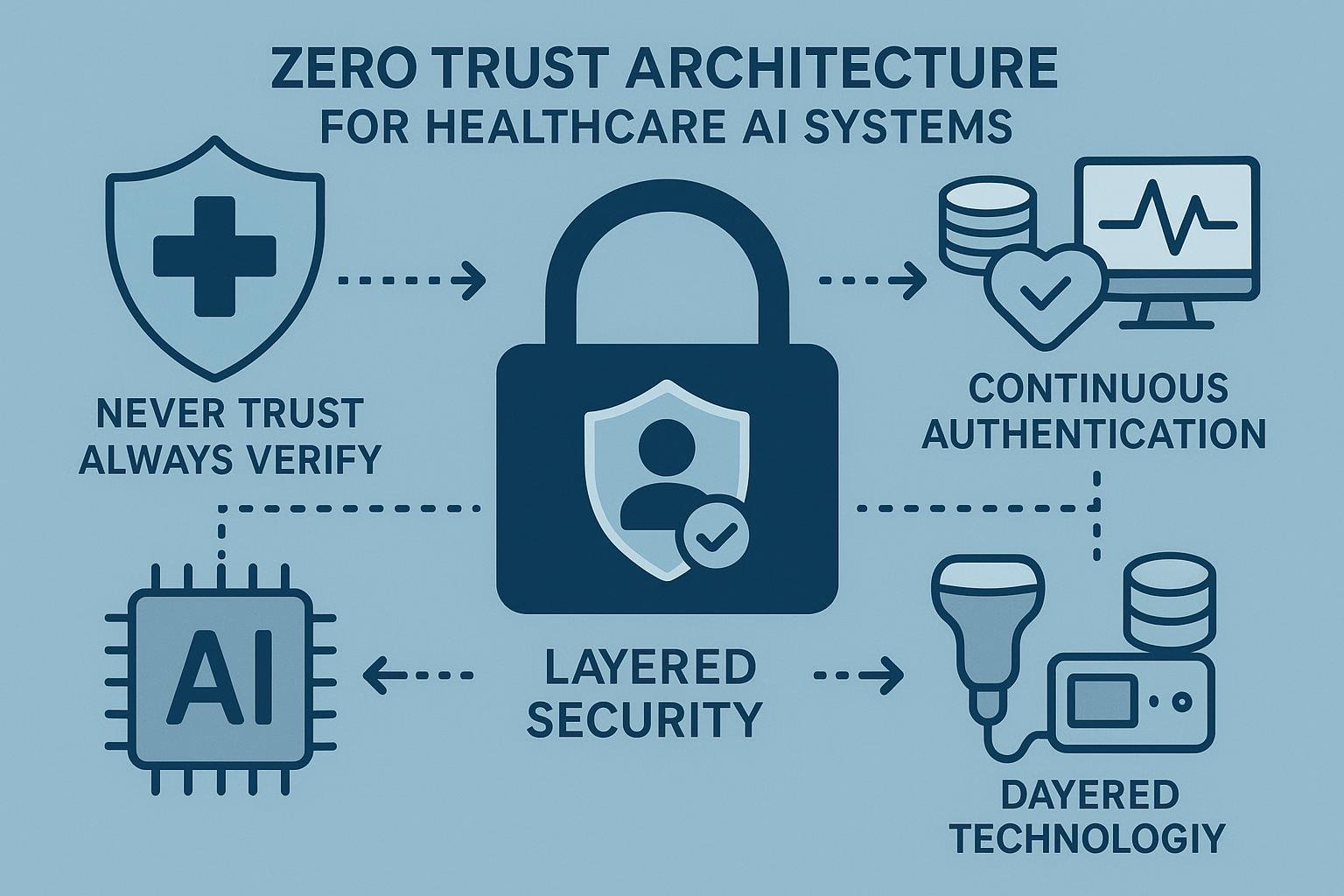
Zero trust is built on three fundamental principles that directly address the security challenges of modern healthcare AI systems:
Principle 1: Never Trust, Always Verify
- No user, device, or system is trusted by default
- Every access request must be authenticated and authorized
- Trust is established through continuous verification, not assumptions
Principle 2: Least Privilege Access
- Users and systems receive only the minimum access necessary
- Access is granted based on specific roles and responsibilities
- Permissions are regularly reviewed and adjusted
Principle 3: Assume Breach
- Security controls assume that breaches will occur
- Systems are designed to contain and limit the impact of breaches
- Continuous monitoring detects and responds to threats in real-time
Zero Trust Architecture Components
A comprehensive zero trust architecture for healthcare AI includes several key components:
Identity and Access Management (IAM):
“`
Zero Trust Identity Framework:
Multi-Factor Authentication (MFA):
- Strong authentication for all users and systems
- Risk-based authentication based on context
- Continuous authentication throughout sessions
Identity Verification:
- Continuous identity validation and verification
- Behavioral analytics for anomaly detection
- Risk scoring based on user and device behavior
Privileged Access Management (PAM):
- Strict controls for administrative access
- Just-in-time access for elevated privileges
- Session recording and monitoring for audit
“`
Device Trust and Management:
“`
Zero Trust Device Framework:
Device Registration and Enrollment:
- Comprehensive device inventory and management
- Security posture assessment before access
- Continuous device health monitoring
Endpoint Detection and Response (EDR):
- Real-time threat detection on all devices
- Automated response to security incidents
- Behavioral analysis for anomaly detection
Mobile Device Management (MDM):
- Secure configuration and policy enforcement
- Remote wipe and lock capabilities
- Application and data containerization
“`
Network Segmentation and Micro-Segmentation:
“`
Zero Trust Network Framework:
Software-Defined Perimeters (SDP):
- Dynamic, encrypted micro-tunnels for access
- Application-specific network access
- Identity-based network segmentation
Micro-Segmentation:
- Granular network controls at the workload level
- East-west traffic inspection and filtering
- Application-aware network policies
Network Access Control (NAC):
- Dynamic network access based on device posture
- Continuous network monitoring and enforcement
- Automated quarantine for non-compliant devices
“`
Implementing Zero Trust for Ambient Clinical AI
Implementing zero trust for ambient clinical AI systems requires a systematic approach that addresses the unique security challenges of healthcare AI while maintaining clinical workflow efficiency.
Phase 1: Assessment and Planning
Current State Assessment:
“`
Zero Trust Readiness Assessment:
Identity and Access Inventory:
- Catalog all users, devices, and applications
- Map current access patterns and permissions
- Identify privileged accounts and access paths
- Document current authentication mechanisms
Network Architecture Analysis:
- Map network topology and traffic flows
- Identify trust boundaries and assumptions
- Catalog network security controls and policies
- Document data flows and processing locations
Risk and Threat Assessment:
- Identify critical assets and data flows
- Assess current threat landscape and vulnerabilities
- Evaluate impact of potential security incidents
- Prioritize risks based on clinical and business impact
“`
Zero Trust Architecture Design:
“`
Healthcare AI Zero Trust Blueprint:
Identity-Centric Security:
- Single sign-on (SSO) with strong authentication
- Risk-based access controls for clinical applications
- Continuous identity verification and monitoring
- Integration with existing healthcare identity systems
Data-Centric Protection:
- Encryption for all patient data at rest and in transit
- Data loss prevention (DLP) for sensitive information
- Rights management for clinical documents and notes
- Privacy-preserving access controls for AI systems
Application Security:
- Zero trust network access (ZTNA) for AI applications
- API security and protection for AI services
- Application-level access controls and monitoring
- Secure development and deployment practices
“`
Phase 2: Core Infrastructure Implementation
Identity and Access Management Implementation:
Multi-Factor Authentication (MFA) Deployment:
“`
Healthcare MFA Implementation:
Clinical Workstation Authentication:
- Biometric authentication for clinical staff
- Smart card integration for existing badge systems
- Mobile app-based authentication for flexibility
- Emergency access procedures for critical situations
AI System Authentication:
- Service account management with strong authentication
- API key management and rotation
- Certificate-based authentication for system-to-system communication
- Automated authentication for AI processing workflows
Risk-Based Authentication:
- Contextual authentication based on location and device
- Behavioral analytics for anomaly detection
- Adaptive authentication based on risk scoring
- Step-up authentication for sensitive operations
“`
Privileged Access Management (PAM):
“`
Healthcare PAM Framework:
Administrative Access Controls:
- Just-in-time access for AI system administration
- Session recording and monitoring for audit compliance
- Approval workflows for privileged operations
- Emergency break-glass procedures with full audit
AI System Privileged Access:
- Secure access to AI training and model management
- Protected access to patient data processing systems
- Controlled access to AI infrastructure and cloud resources
- Audit trails for all privileged AI operations
Vendor and Third-Party Access:
- Secure remote access for AI vendor support
- Time-limited access with automatic expiration
- Monitored sessions with full activity logging
- Restricted access to only necessary systems and data
“`
Network Segmentation Implementation:
Micro-Segmentation for AI Systems:
“`
AI System Micro-Segmentation:
AI Processing Zones:
- Isolated network segments for AI training and inference
- Encrypted communication between AI components
- Granular firewall rules for AI traffic flows
- Monitoring and logging of all AI network activity
Data Processing Isolation:
- Separate network zones for different data sensitivity levels
- Isolated processing for different patient populations
- Secure communication channels for cross-zone data transfer
- Network-level data loss prevention and monitoring
Cloud and Hybrid Segmentation:
- Secure connectivity between on-premises and cloud AI systems
- Software-defined perimeters for cloud AI services
- Encrypted tunnels for AI data transmission
- Network access controls for cloud AI resources
“`
Phase 3: Advanced Security Controls
Continuous Monitoring and Analytics:
Security Information and Event Management (SIEM) for AI:
“`
AI-Aware SIEM Implementation:
AI-Specific Event Collection:
- Logging of all AI system activities and transactions
- Collection of AI model performance and behavior metrics
- Integration with AI infrastructure monitoring systems
- Correlation of AI events with security incidents
Behavioral Analytics:
- User and entity behavior analytics (UEBA) for AI systems
- Machine learning-based anomaly detection
- Risk scoring for AI system activities
- Automated alerting for suspicious AI behavior
Threat Intelligence Integration:
- AI-specific threat intelligence feeds
- Indicators of compromise (IoCs) for AI attacks
- Threat hunting capabilities for AI environments
- Integration with external threat intelligence sources
“`
Zero Trust Network Access (ZTNA):
“`
ZTNA for Healthcare AI:
Application-Specific Access:
- Granular access controls for individual AI applications
- Identity-based access without VPN requirements
- Encrypted micro-tunnels for AI application access
- Dynamic access policies based on user context and risk
Device-Based Access Controls:
- Device trust verification before AI system access
- Continuous device posture assessment
- Automated quarantine for non-compliant devices
- Integration with mobile device management (MDM) systems
Location and Context-Aware Access:
- Geographic restrictions for AI system access
- Time-based access controls for clinical workflows
- Risk-based access decisions using multiple factors
- Adaptive policies based on threat intelligence
“`
Real-World Implementation: Zero Trust Success Stories
Several healthcare organizations have successfully implemented zero trust architectures for their ambient clinical AI systems, demonstrating both the challenges and benefits of this approach.
Case Study 1: Large Academic Medical Center
Organization: 1,200-bed academic medical center with multiple campuses
Challenge: Secure ambient clinical AI deployment across distributed infrastructure
Objective: Implement zero trust to protect patient data while enabling AI innovation
Implementation Approach:
Phase 1: Identity-Centric Foundation (Months 1-6)
“`
Identity Infrastructure Transformation:
Single Sign-On (SSO) Implementation:
- Deployed enterprise SSO for all clinical applications
- Integrated ambient AI systems with centralized identity
- Implemented risk-based authentication policies
- Established emergency access procedures
Multi-Factor Authentication (MFA):
- Biometric authentication for clinical workstations
- Mobile app-based MFA for remote access
- Smart card integration with existing badge systems
- Risk-based step-up authentication
Privileged Access Management:
- Just-in-time access for AI system administration
- Session recording for all privileged operations
- Approval workflows for sensitive AI operations
- Comprehensive audit trails for compliance
“`
Phase 2: Network Transformation (Months 7-12)
“`
Zero Trust Network Implementation:
Micro-Segmentation Deployment:
- Software-defined perimeters for AI processing zones
- Granular firewall rules for AI traffic flows
- Encrypted communication between all AI components
- Network access controls based on identity and device trust
Zero Trust Network Access (ZTNA):
- Application-specific access for ambient AI systems
- Identity-based access without traditional VPN
- Continuous device trust verification
- Dynamic access policies based on risk assessment
Cloud Security Integration:
- Secure connectivity to cloud-based AI services
- Software-defined perimeters for hybrid AI deployments
- Encrypted data transmission for all AI operations
- Cloud access security broker (CASB) integration
“`
Phase 3: Advanced Analytics and Monitoring (Months 13-18)
“`
Continuous Security Monitoring:
AI-Aware SIEM Deployment:
- Comprehensive logging of all AI system activities
- Behavioral analytics for AI user and system behavior
- Machine learning-based anomaly detection
- Automated incident response for AI security events
Threat Hunting and Intelligence:
- AI-specific threat hunting capabilities
- Integration with external threat intelligence feeds
- Proactive threat detection for AI environments
- Continuous improvement of detection capabilities
Compliance and Audit:
- Automated compliance monitoring and reporting
- Real-time audit trail generation
- Regulatory compliance validation
- Continuous risk assessment and management
“`
Results and Outcomes:
Security Improvements:
- 95% reduction in successful lateral movement attacks
- 80% faster detection and response to security incidents
- Zero patient data breaches since zero trust implementation
- 100% compliance with healthcare security regulations
Operational Benefits:
- 40% reduction in help desk tickets related to access issues
- 60% faster onboarding for new clinical staff
- 50% reduction in time required for security audits
- Enhanced user experience with seamless access to AI systems
AI-Specific Benefits:
- Secure deployment of ambient AI across all clinical areas
- Enabled multi-site AI research collaboration
- Improved AI system performance through optimized network access
- Enhanced patient trust through demonstrated security improvements
Case Study 2: Regional Health System
Organization: 15-hospital regional health system
Challenge: Secure ambient AI deployment across multiple facilities with varying IT maturity
Objective: Implement standardized zero trust architecture for consistent security
Implementation Strategy:
Phased Rollout Approach:
“`
Multi-Site Zero Trust Deployment:
Pilot Implementation (Months 1-3):
- Selected 2 hospitals for initial zero trust deployment
- Focused on ambient AI systems and critical applications
- Validated technical approach and operational procedures
- Developed training and change management programs
Gradual Expansion (Months 4-12):
- Rolled out to 5 additional hospitals in phases
- Standardized zero trust architecture across sites
- Implemented centralized management and monitoring
- Refined policies and procedures based on lessons learned
Full Deployment (Months 13-18):
- Completed deployment across all 15 hospitals
- Integrated with existing healthcare IT systems
- Established ongoing operations and maintenance procedures
- Implemented continuous improvement processes
“`
Standardized Zero Trust Framework:
“`
Regional Health System Zero Trust Architecture:
Centralized Identity Management:
- Single identity provider for all hospitals
- Standardized authentication policies and procedures
- Centralized privileged access management
- Consistent user experience across all facilities
Distributed Security Controls:
- Local security enforcement at each hospital
- Centralized policy management and distribution
- Real-time security monitoring and alerting
- Coordinated incident response across the system
Cloud-First AI Security:
- Standardized cloud security architecture for AI systems
- Consistent data protection and privacy controls
- Centralized AI security monitoring and management
- Shared threat intelligence and security analytics
“`
Results:
- Successfully deployed zero trust across all 15 hospitals
- Achieved 99.9% uptime for ambient AI systems
- Reduced security incidents by 85% across the health system
- Standardized security posture with consistent policies and controls
- Enabled system-wide AI research and quality improvement initiatives
Advanced Zero Trust Techniques for Healthcare AI
Beyond basic zero trust implementation, several advanced techniques can provide additional security benefits for healthcare AI systems:
Adaptive Trust and Risk-Based Access
Dynamic Trust Scoring:
“`
Adaptive Trust Framework:
User Behavior Analytics:
- Continuous analysis of user behavior patterns
- Risk scoring based on deviations from normal behavior
- Adaptive access controls based on real-time risk assessment
- Machine learning-based trust score calculation
Device Trust Assessment:
- Continuous device posture evaluation
- Risk scoring based on device security configuration
- Adaptive access based on device trust level
- Automated remediation for non-compliant devices
Contextual Risk Evaluation:
- Location-based risk assessment
- Time-based access controls
- Application-specific risk evaluation
- Environmental factor consideration (network, threat landscape)
“`
Risk-Based Authentication:
“`
Adaptive Authentication Framework:
Low-Risk Scenarios:
- Standard authentication for routine clinical access
- Streamlined access for trusted devices and locations
- Reduced friction for common clinical workflows
- Continuous monitoring for risk escalation
Medium-Risk Scenarios:
- Step-up authentication for sensitive operations
- Additional verification for unusual access patterns
- Enhanced monitoring and logging
- Time-limited access with automatic re-authentication
High-Risk Scenarios:
- Multi-factor authentication with additional verification
- Manager approval for high-risk operations
- Enhanced monitoring and session recording
- Restricted access with additional security controls
“`
Zero Trust for AI Model Security
AI Model Protection:
“`
Zero Trust AI Model Framework:
Model Access Controls:
- Identity-based access to AI models and training data
- Granular permissions for model development and deployment
- Audit trails for all model access and modifications
- Secure model versioning and change management
Model Integrity Verification:
- Cryptographic signing of AI models
- Continuous integrity monitoring
- Automated detection of unauthorized model changes
- Secure model deployment and update procedures
Model Performance Monitoring:
- Continuous monitoring of AI model behavior
- Anomaly detection for model performance degradation
- Automated alerting for suspicious model activity
- Integration with security incident response procedures
“`
Zero Trust for Multi-Cloud AI Environments
Cloud-Native Zero Trust:
“`
Multi-Cloud Zero Trust Architecture:
Cloud Identity Federation:
- Federated identity across multiple cloud providers
- Consistent authentication and authorization policies
- Single sign-on for multi-cloud AI environments
- Centralized identity governance and compliance
Cloud Security Posture Management:
- Continuous monitoring of cloud security configurations
- Automated remediation of security misconfigurations
- Compliance monitoring across multiple cloud environments
- Unified security policy enforcement
Cloud Access Security Broker (CASB):
- Centralized visibility and control for cloud AI services
- Data loss prevention for cloud-based AI processing
- Shadow IT discovery and management
- Risk assessment for cloud AI applications
“`
Measuring Zero Trust Success
Implementing zero trust for healthcare AI requires comprehensive measurement and monitoring to ensure effectiveness and continuous improvement:
Security Effectiveness Metrics
Threat Detection and Response:
“`
Zero Trust Security Metrics:
Detection Capabilities:
- Mean time to detection (MTTD) for security incidents
- False positive rates for security alerts
- Coverage of security monitoring across AI systems
- Effectiveness of behavioral analytics and anomaly detection
Response Capabilities:
- Mean time to response (MTTR) for security incidents
- Incident containment effectiveness
- Automated response success rates
- Recovery time for AI systems after incidents
Prevention Effectiveness:
- Reduction in successful attacks and breaches
- Lateral movement prevention success rates
- Privileged access abuse prevention
- Data exfiltration prevention effectiveness
“`
Access Control Effectiveness:
“`
Access Control Metrics:
Authentication Success:
- Multi-factor authentication adoption rates
- Authentication failure rates and patterns
- Risk-based authentication effectiveness
- User experience satisfaction with authentication
Authorization Accuracy:
- Least privilege access compliance rates
- Access review and certification completion
- Unauthorized access attempt detection
- Privilege escalation prevention effectiveness
Access Efficiency:
- Time to provision access for new users
- Self-service access request success rates
- Help desk tickets related to access issues
- User productivity impact of access controls
“`
Operational Efficiency Metrics
System Performance:
“`
Zero Trust Performance Metrics:
Network Performance:
- Latency impact of zero trust controls
- Throughput performance for AI data processing
- Network availability and reliability
- User experience with network access
Application Performance:
- AI application response times
- System availability and uptime
- Resource utilization efficiency
- Scalability and performance under load
Administrative Efficiency:
- Time required for security administration
- Automation rates for security operations
- Policy management and deployment efficiency
- Compliance reporting and audit preparation time
“`
Compliance and Risk Metrics
Regulatory Compliance:
“`
Compliance Metrics:
HIPAA Compliance:
- Access control compliance rates
- Audit trail completeness and accuracy
- Privacy protection effectiveness
- Breach prevention and response compliance
Industry Standards:
- NIST Cybersecurity Framework alignment
- ISO 27001 compliance metrics
- HITRUST certification maintenance
- SOC 2 audit results and findings
Risk Management:
- Risk assessment accuracy and completeness
- Risk mitigation effectiveness
- Residual risk levels and trends
- Risk appetite alignment and management
“`
Building Your Zero Trust Strategy
Healthcare organizations considering zero trust for their ambient clinical AI systems should develop a comprehensive strategy that addresses technical, operational, and strategic considerations:
Strategic Planning Framework
Organizational Assessment:
“`
Zero Trust Readiness Evaluation:
Leadership and Governance:
- Executive sponsorship and commitment
- Cross-functional team formation and leadership
- Budget allocation and resource planning
- Change management and communication strategy
Technical Readiness:
- Current security architecture assessment
- Infrastructure capacity and capability evaluation
- Integration requirements with existing systems
- Skill gaps and training needs assessment
Operational Readiness:
- Current security operations maturity
- Incident response capabilities and procedures
- Compliance and audit readiness
- User training and adoption planning
“`
Implementation Roadmap:
“`
Zero Trust Implementation Timeline:
Phase 1: Foundation (Months 1-6)
- Identity and access management implementation
- Basic network segmentation and controls
- Security monitoring and logging enhancement
- Staff training and awareness programs
Phase 2: Expansion (Months 7-12)
- Advanced network segmentation and micro-segmentation
- Zero trust network access deployment
- Enhanced monitoring and analytics
- Integration with AI systems and workflows
Phase 3: Optimization (Months 13-18)
- Advanced analytics and machine learning integration
- Automated response and remediation
- Continuous improvement and optimization
- Full integration with AI development and operations
Phase 4: Maturity (Months 19+)
- Advanced threat hunting and intelligence
- Predictive security analytics
- Industry leadership and best practice sharing
- Continuous innovation and technology adoption
“`
Take Action: Implement Comprehensive AI Security
Zero trust architecture provides the comprehensive security framework needed to protect ambient clinical AI systems in today’s threat landscape. Don’t rely on outdated perimeter-based security that assumes trust—implement a security model that verifies everything.
Download our Zero Trust Implementation Roadmap to get started with practical tools and resources:
- Zero trust maturity assessment and planning tools
- Technical architecture templates and implementation guides
- Policy and procedure templates for healthcare AI
- Training materials and change management resources
- Vendor evaluation criteria and selection guides
[Download the Zero Trust Implementation Roadmap →]()
Ready to transform your AI security posture? Our team of zero trust specialists can help you assess your current security architecture and develop a customized implementation strategy that protects your ambient clinical AI systems while enabling clinical innovation.
[Schedule Your Zero Trust Security Assessment →]()
Join our zero trust community to connect with other healthcare organizations implementing comprehensive security architectures and share best practices and lessons learned.
[Join the Zero Trust Security Community →]()
*This is Part 8 of our 12-part series on securing ambient clinical note AI systems. In our next article, we’ll explore cloud security best practices specifically designed for healthcare AI deployments in public, private, and hybrid cloud environments.*
Coming Next Week: “Cloud Security for Healthcare AI: Protecting Patient Data in the Cloud”
About EncryptCentral: We are the leading cybersecurity consulting firm specializing in healthcare AI security and zero trust architecture. Our team includes zero trust architects, healthcare cybersecurity experts, and AI security specialists who can help you implement comprehensive security frameworks that protect your ambient clinical AI systems while enabling clinical innovation and operational efficiency.
*Ready to implement zero trust for your ambient clinical AI systems? Our expert security architects can guide you through every aspect of implementation, from initial assessment to full production deployment and ongoing optimization.*
Ready to Secure Your Healthcare AI Systems?
Get our comprehensive Healthcare AI Security Assessment Toolkit—a $5,000 value, absolutely free. This toolkit includes:
- ✓ 23-Point AI Security Risk Assessment Checklist
- ✓ HIPAA Compliance Framework for AI Systems
- ✓ Incident Response Playbook for AI Security Events
- ✓ ROI Calculator for AI Security Investments